
Dina Nomena Andriarimanjaka
THE ARCHAEOLOGY OF THE (IN)SIGNIFICANT
A Meditation on the Invisible
~~~~~
15.07.2026
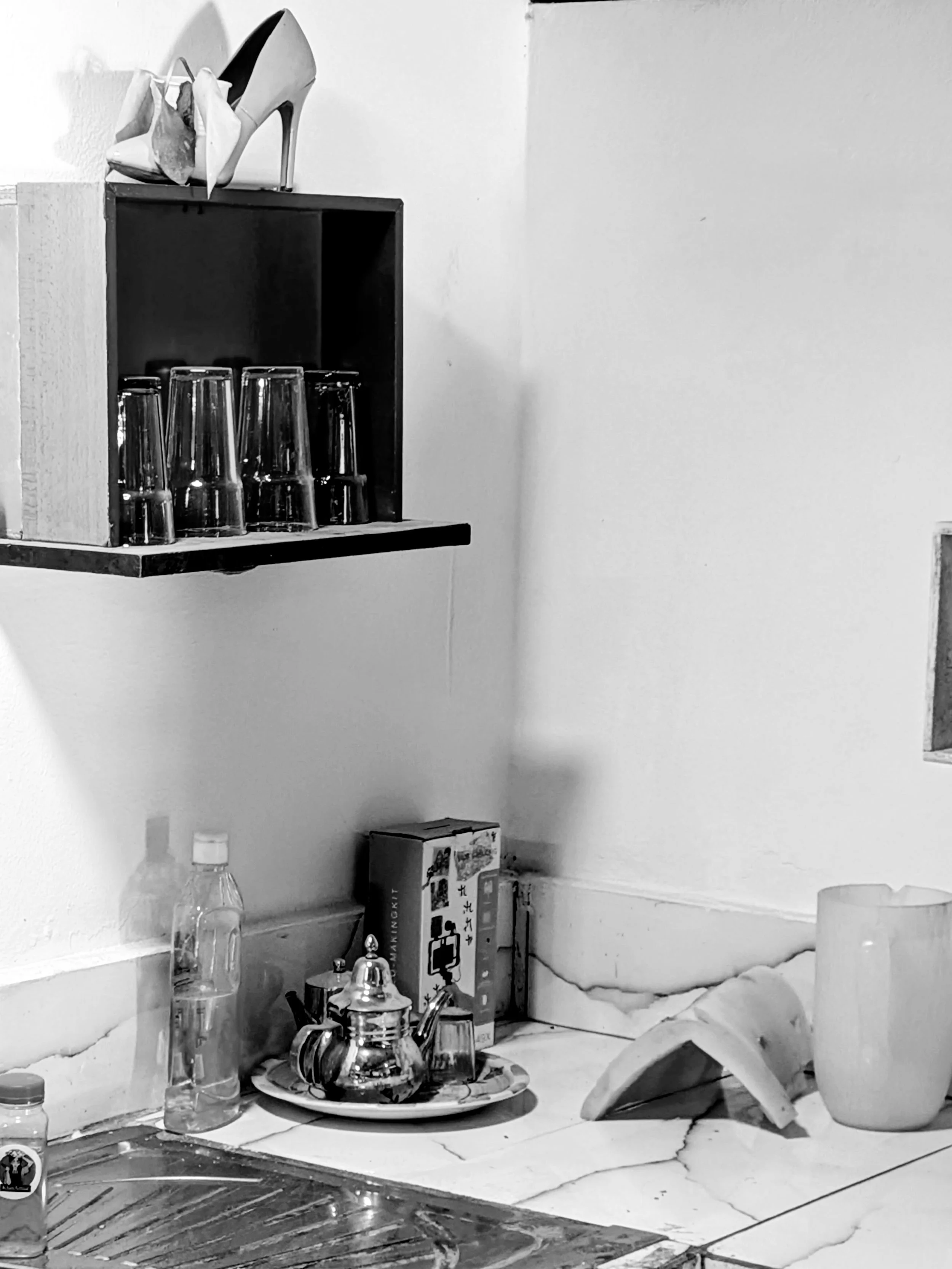
Why does the hammer enter the museum but not the basin?
begins by shifting
the gaze toward a silence.
A silence
that nourishes
that washes
that repairs
that holds the world together.
The silence of objects in the hands
of a womxn and non-binary individuals within the four walls of a household.
A basin
a mortar
a blackened pot
a rag folded in a corner
a cloth worn by generations of hands.
These and similar everyday objects are the sentinels of the interiors of African womxn and non-binary individuals. They bear the visible traces of daily gestures. Their surfaces speak of effort, repetition, and duration. They organize space, structure rhythms, and distribute roles. These objects organize the world.
They measure time, sustain bodies, and regulate the invisible economies of homes. They are the silent instruments of a gesture repeated, transmitted, but rarely named.
The Archaeology of the (In)significant is one of the key projects of Djolifon’s archival initiative, Ka’mara (to hold for safekeeping in the Bambara language). The Archaeology of the (In)significant explores the theme of (re)productive labor and care through a multivisual project—a meditation that traverses domestic interiors as intimate and political territories. The project stems from a simple and radical hypothesis: the ordinary is an infrastructure.
This multiyear, panafrican project grounds its exploration in close observation of everyday moments, seeking to illuminate the processes, gestures, and systems—normally overlooked—that sustain life. This invisible (re)productive labor, whether linked to domestic tasks, education, care, or cultural transmission, is at the heart of this investigation. Through Ka’mara, Djolifon invites African artists to deploy a range of visual mediums—photography, video, or other forms of image-based artistic expression—to deconstruct, reinterpret, revalue, and above all make visible these fundamental activities.

In revealing the (In)significant, we restore the archive between hand and material.
The project’s multivisual approach allows the complexity of the subject to be examined from numerous perspectives. By traversing domestic interiors as intimate and political territories, the Archaeology of the (In)significant does not merely document; it challenges, questions, and proposes new readings of these familiar objects and spaces. The visual aesthetic amplifies the gaze, transforming elements of the everyday into subjects of deep and meaningful observation.
The Archaeology of the (In)significant is more than a simple archival project. It is an invitation to (re)discover and appreciate the overlooked foundations of our existence as social, gendered beings. By considering the ordinary as an essential infrastructure, Djolifon proposes a visual and intellectual meditation on (re)productive labor, its political implications, and its central place in the construction of our daily realities.
Displacing the Hierarchy of Values
Why does the hammer enter the museum but not the basin?
Why is the object of production valorized while the reproductive tool remains off-frame? Who decides what is worth preserving and displaying?
The Archaeology of the (In)significant enacts a restitution. The rag becomes archive. The mat becomes a surface of memory. The pot becomes a thermal chronology of the everyday.
In the repetition of the gesture—
pound
wash
braid
carry
mend
—a transnational memory takes shape. Forms vary, materials shift according to climate and economy, but the structure holds: a logistics of sustaining life, of bonds, of transmission.
This project seeks convergences. It listens to what materials know about gestures and about the murmurs of womxn and non-binary people. Crossing these territories reveals a continuity and makes visible a living archive that exposes a sorority of the unseen — discreet, persistent, essential.
Each year, Djolifon invites five African artists from the continent and diaspora to an exploration that reveals transnational memories through which the object becomes the pivot of a political and poetic negotiation and resistance. These territories are conceived as constellations. The objects speak across borders, revealing continuities in the invisibilization of the labor of womxn and non-binary people—and also strong cultural specificities.
For the inaugural edition of the project in 2026, artists from Algeria, Benin, Madagascar, Mali, and Mauritania enter into dialogue through their excavation of the (in)significant.
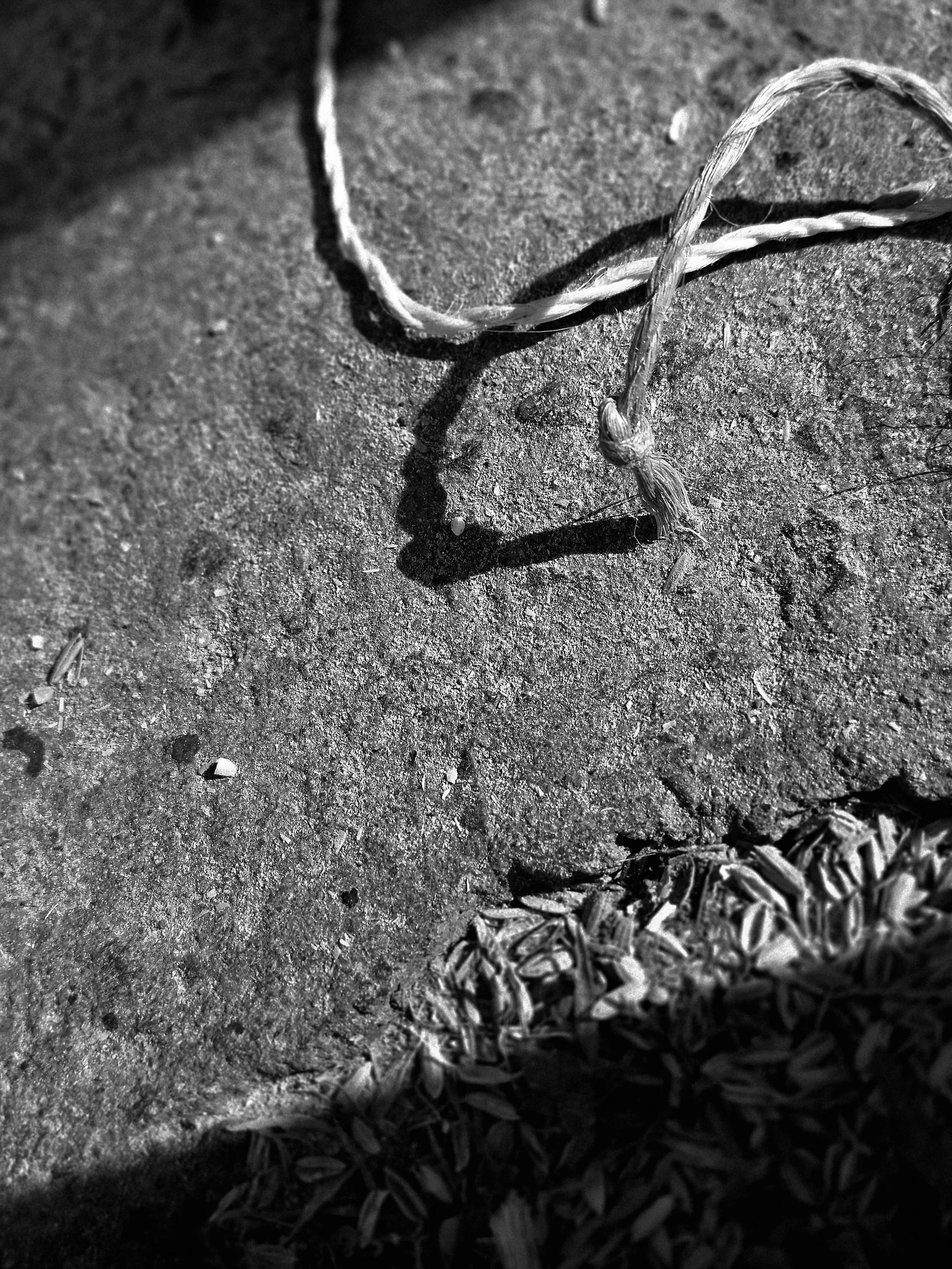
Who can delegate the effort?
Who remains assigned to the gesture?
Who uses what?
The Domestic Object as Archive
The exploration rests on three conceptual axes:
The archaeology of the present: Rather than excavating ancient remains, the project explores the contemporary as an active archaeological site. Wear, repairs, layers of materials — these become evidence.
Material matrimoine: These objects constitute an unrecognized matrimoigne (maternal legacy). They transmit gestures, techniques, and silent narratives that defy classical institutional structures.
The economy of care: (Re)productive labor is an invisible infrastructure. These objects are its tools and its extensions. They reveal a social organization in which the female body becomes the interface between matter and community.
The Archaeology of the (In)significant takes ordinary objects as material and immaterial witnesses to the (re)productive labor of society. In reproducing them visually and crossing their contexts, the images become spaces of dialogue. Their convergences emerge: same functions, similar gestures, variations in form, material, and color. A Beninese basin answers a Malagasy pot; a Malian mortar echoes another, elsewhere.
The evolution of domestic objects also narrates social mutations. The shift from mortar to blender, from black soap to dish liquid, from basin to washing machine, is not merely a matter of technological progress: it discloses aspirations, transformations in domestic time—a cartography of class. In questioning this mutation, the object becomes an inquiry:
Who can delegate the effort?
Who remains assigned to the gesture?
Who uses what?
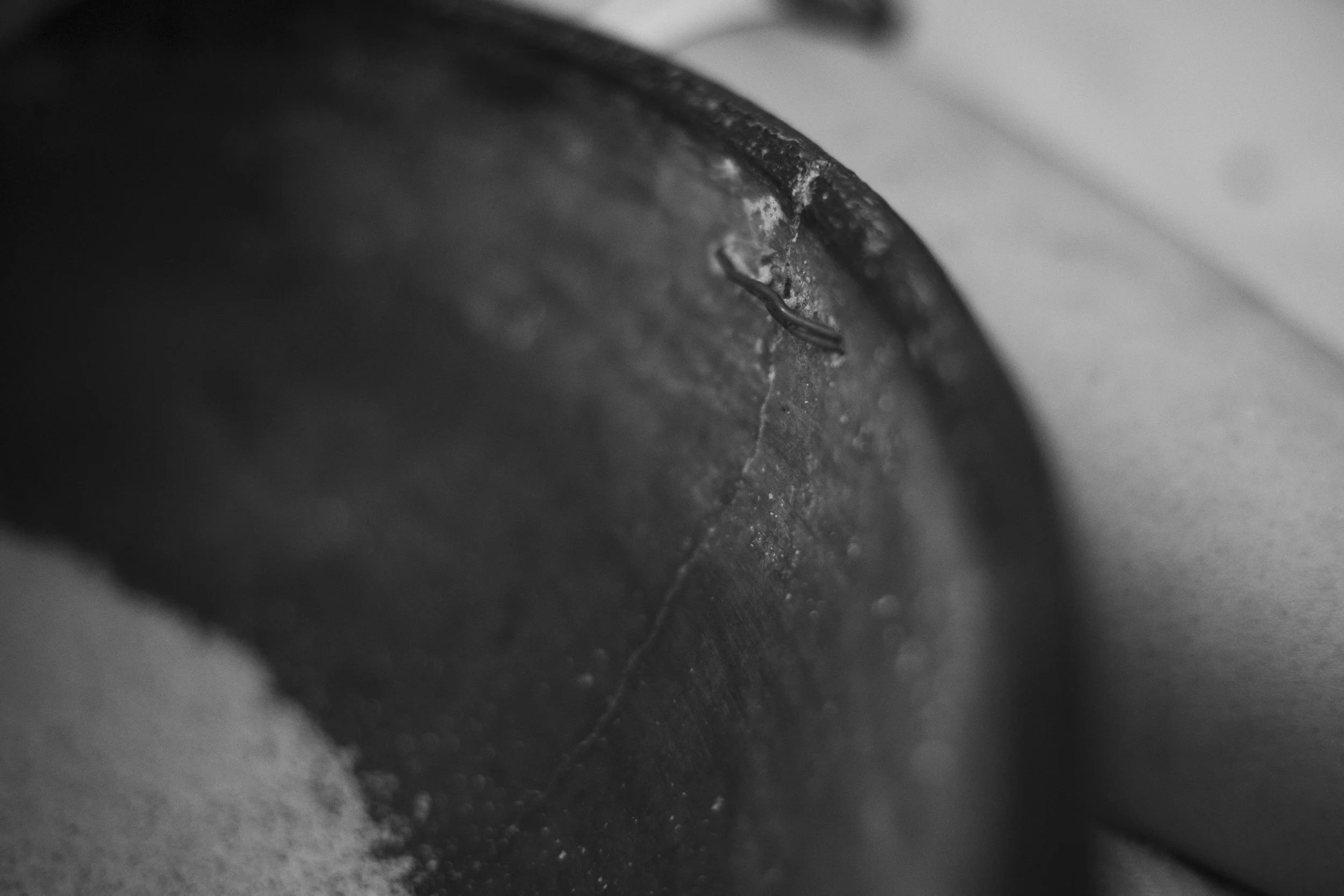
“How do we validate what is, by its nature, beyond the market?”
The Expansion of Capitalism into the Intimate Sphere
At the heart of this inquiry lies a central political question: “How do we rethink the valorization of reproductive labor beyond its simple monetary translation?”
Feminist demands for the remuneration of intimate labor have made visible the full scope of reproductive labor. Here, the reflection shifts: “How do we validate what is, by its nature, beyond the market?” Emotional labor, the capacity to maintain family bonds, to listen, to console, to carry the memory and affective stability of the household—these escape, by their nature, all logic of quantification. While the Archaeology of the (In)significant thus explores the tension between recognition and commodification, it also seeks out the zones of life that refuse to be monetized.
Research and interviews conducted with womxn and non-binary people across the African continent document their perspectives: What dimensions of their lives do they wish to preserve from productivist logic? What do they wish to sanctuarize against capitalist fundamentalism?
The Archaeology of the (In)significant is an archaeology of resistance that sacralizes the ordinary. It recognizes care as an affective and human sovereignty. It proposes to rethink the value of silent economies—from the perspective of that which cannot be quantified.
Author and co-curator: Dina Nomena Andriarimanjaka
Dina is an artist, researcher, and visual storyteller from Madagascar. An Afro-feminist, she employs an experimental, transdisciplinary approach that explores society and history, women's heritage, and its transmission. Dina questions the representation of women and their relationship to the world, to individual and collective memory. Through a visual anthropology approach, she represents the poetry of archival fragments using a variety of artistic media and techniques. Her works are rooted in archival images, which she embellishes and complements with gestures such as collage, sewing, and embroidery, allowing her to (re)write, narrate, and (re)stitch stories.
Photos: Mariam S. Armisen, Kani Sissoko, Dihia Taleb and Dina Nomena Andriarimanjaka